

For some individuals suffering from vitiligo, hair loss will be yet another aspect of life that adds to their overall distress. Many individuals dealing with vitiligo will be curious if they can have a hair transplant; is a hair transplant safe for someone with vitiligo? Will having a hair transplant make vitiligo worse?
It is reassuring to note that although vitiligo is not necessarily a contraindication for hair transplantation, the success of the transplant will depend upon several critical criteria including the stability of the disease and careful assessment and consultation with both a dermatologist and a hair restoration surgeon.
Surprisingly, recent scientific research demonstrates that hair follicles possess melanocyte stem cells. Melanocyte stem cells are capable of generating pigment-producing cells that produce color. In fact, follicular transplantation has even been utilized as a surgical method for stabilizing vitiligo in select patients.
This article presents the most up-to-date scientific evidence regarding the interaction between hair transplantation and vitiligo. Additionally, the article will address the possible dangers of undergoing a hair transplant for individuals with vitiligo, specifically the Koebner phenomenon. The article will provide information to assist patients in determining whether or not to proceed with a FUE hair transplant.
What Is Vitiligo?
Understanding the Autoimmune Disorder
Prior to exploring hair transplantation in individuals afflicted with vitiligo, it is necessary to fully understand the nature of vitiligo.
Vitiligo is a long-lasting, chronic autoimmune disorder. Due to an abnormal reaction on the part of the immune system, melanocytes, the pigment-producing cells responsible for creating melanin, or color in the skin and hair, are destroyed. As a result, areas of the skin where the melanocytes have been eliminated appear as white patches.
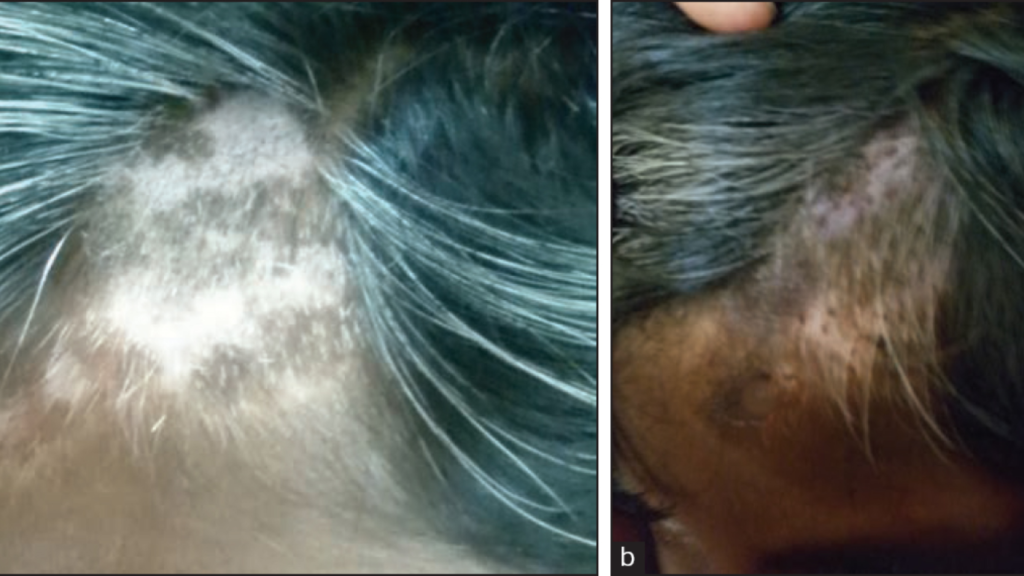
On occasion, the hair developing within these patches will lose all of its pigment. This phenomenon is referred to as leukotrichia.
Does Vitiligo Result in Hair Loss?
Among the most frequent inquiries made by individuals are those pertaining to whether or not vitiligo results in hair loss.
Generally speaking, vitiligo destroys melanocytes, not hair follicles. Therefore, once melanocytes have disappeared, the surrounding hair usually continues to grow normally; however, it may appear white due to its lack of pigment.
This difference is especially relevant since healthy hair follicles can be transferred successfully when the disease is stable.
Can People with Vitiligo Undergo Hair Transplants?
Yes. In Carefully Selected Patients
Many people believe that individuals afflicted with autoimmune disorders cannot undergo hair transplantation. Fortunately, this is untrue.
Current literature indicates that individuals with stable vitiligo can safely undergo hair transplantation provided they receive proper medical evaluation prior to surgery.
Specifically, certain requirements must be be satisfied before proceeding with surgery.
Who Usually Makes a Good Candidate for Surgery?
Typically, candidates are deemed acceptable when:
- Stable vitiligo exists for a minimum of twelve months.
- New white patches do not develop.
- Active lesions neither expand nor contract.
- No signs of the Koebner phenomenon exist.
- A dermatologist verifies disease stabilization.
- Androgenetic alopecia is the primary cause of hair loss instead of active inflammation.
Thus, decisions should be individually based rather than predicated exclusively on the presence of vitiligo.
Why Are Hair Follicles So Important When Treating Vitiligo?
Hair Follicles Are More Than Just Hair-Producing Structures
As scientists study hair follicles in conjunction with treating vitiligo, why is interest in hair follicles increasing?
The reason for this increased interest relates directly to biology.
Melanocyte stem cells reside in the bulge region within hair follicles. These stem cells serve as a reservoir that contains pigment-producing cells and may be called upon to generate new melanocytes.
When healthy follicles are implanted into depigmented areas, melanocytes can migrate outward and eventually begin restoring pigmentation around each transplanted follicle.
Due to this remarkable property, various dermatologists have researched using hair follicle transplantation as a method of treating stable vitiligo and not merely as a cosmetic means of restoring hair.
What Do Scientific Studies Show?
Evidence Supporting Hair Transplantation in Stable Vitiligo
Compared with hair transplantation for androgenetic alopecia, existing scientific data remain limited. Nevertheless, the available evidence appears promising.
Hair Follicle Transplantation Study (Thakur et al., 2015)
One of the most frequently referenced studies assessed fifty patients who underwent follicular unit transplantation for vitiligo. The researchers reported that:
- Over sixty percent of participants achieved good to excellent repigmentation.
- Natural color matching was observed in most participants.
- Some participants also demonstrated improvement in leukotrichia.
- No significant adverse events were reported.
The authors concluded that follicular transplantation represented a safe and effective surgical option for appropriately selected patients with stable vitiligo.
Body Hair Transplantation Case Report
Will body hair transplantation restore pigmentation in skin affected by vitiligo?
A published case report demonstrated that body hair transplantation restored pigmentation in an area affected by stable vitiligo.
Researchers transplanted body hair follicles into a depigmented area. Within weeks, repigmentation began, while complete repigmentation occurred approximately three months after the procedure.
Although this involved only one participant, it illustrated the potential for restored pigmentation through hair follicle transplantation.
Plastic and Reconstructive Surgery Study (2024)
Recent publications explored patients with follicular vitiligo, a rare form that primarily affects hair pigmentation.
Findings included:
- Graft survival rates greater than ninety percent.
- Healthy hair development.
- Normal color restoration of transplanted hair.
- High patient satisfaction.
- No recurrence during follow-up.
This publication provided additional evidence supporting the biological ability of hair follicles to restore pigmentation.
What Is the Koebner Phenomenon?
Why Should It Be Considered Before Undergoing a Hair Transplant?
Undoubtedly, the greatest concern for individuals diagnosed with vitiligo before undergoing a hair transplant is the Koebner phenomenon.
But what exactly is this phenomenon?
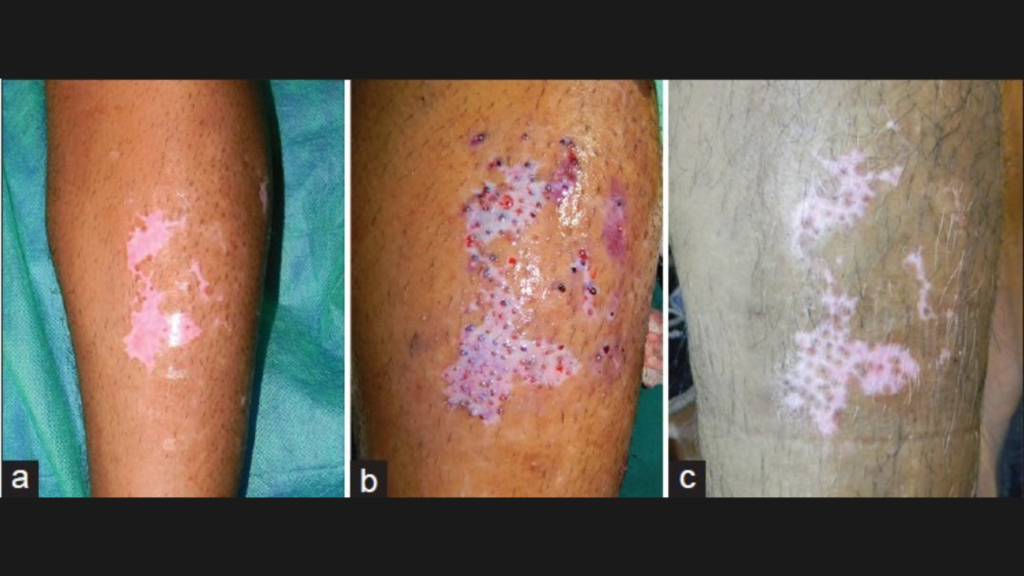
The Koebner phenomenon describes the development of new vitiligo lesions following skin injury.
Possible triggers include:
- Surgery
- Cuts
- Burns
- Tattoos
- Microneedling
- Skin trauma
Since a FUE hair transplant requires thousands of micro-incisions, many individuals worry that the procedure could trigger additional white patches.
Fortunately, current evidence indicates that this risk is primarily associated with active vitiligo rather than stable disease.
Therefore, surgeons generally recommend delaying surgery until the condition has remained inactive for an appropriate period.
Can FUE Hair Transplant Trigger Vitiligo?
What Does the Evidence Say?
Is there proof that FUE causes vitiligo?
At present, there is no strong scientific evidence showing that FUE hair transplantation routinely triggers vitiligo in patients with stable disease.
Nevertheless, researchers acknowledge a theoretical risk because every surgical procedure causes controlled skin trauma.
Fortunately, experienced surgeons minimise this risk by:
- Using small punch sizes.
- Performing atraumatic graft extraction.
- Reducing unnecessary tissue manipulation.
- Carefully planning recipient sites.
- Monitoring patients before and after surgery.
Published medical literature has also described follicular unit extraction as a therapeutic option for stable vitiligo, particularly in selected cases involving leukotrichia. However, this evidence comes mainly from small studies and case reports rather than large controlled trials.
What Should You Do Before a Hair Transplant?
Preparing for a Safe Procedure
Patients frequently ask whether additional testing is necessary before surgery.
Although no universal protocol exists, most specialists recommend the following steps:
1. Visit a Dermatologist
A dermatologist should confirm that vitiligo is stable.
2. Review Your Medical History
Any autoimmune conditions, medications or previous treatments should be discussed.
3. Evaluate the Donor Area
Healthy donor hair remains essential for successful transplantation.
4. Discuss Expectations
Every patient is different. Therefore, realistic expectations are crucial for satisfaction.
5. Choose an Experienced Hair Restoration Surgeon
A physician experienced in both hair restoration and dermatological conditions can significantly improve treatment planning.
What Results Can Patients Expect?
Is Success Comparable to Other Hair Transplant Patients?
When vitiligo remains stable, outcomes are generally comparable to those seen in patients without the condition.
Most patients can expect:
- High graft survival.
- Natural hair growth.
- Normal healing.
- Excellent cosmetic improvement.
- Long-term stability when underlying disease remains inactive.
However, every case should be assessed individually, particularly when autoimmune activity is uncertain.
Frequently Asked Questions
Can Vitiligo Spread After a Hair Transplant?
Current evidence suggests that stable vitiligo carries a low risk of progression after surgery. However, active disease may increase the likelihood of developing new lesions.
Is FUE Better Than FUT for Patients with Vitiligo?
Although comparative studies are limited, many surgeons prefer FUE hair transplantation because it creates smaller wounds and generally causes less tissue trauma.
Can White Hair Become Pigmented Again?
Interestingly, several published studies have demonstrated that transplanted hair follicles may restore pigmentation in selected patients by introducing healthy melanocyte stem cells.
Should Vitiligo Be Treated Before Hair Transplant Surgery?
Yes. If the disease is active, dermatologists usually recommend achieving disease stability before considering surgical treatment.
Why Choosing the Right Hair Restoration Clinic Matters
Expertise Makes a Significant Difference
Not every hair transplant clinic has experience managing patients with autoimmune skin disorders.
For this reason, patients should choose clinics that:
- Perform comprehensive medical assessments.
- Work alongside dermatologists when necessary.
- Use physician-led surgical techniques.
- Follow evidence-based treatment protocols.
- Offer realistic expectations rather than exaggerated promises.
At TopHairLossClinic.com, patients can compare experienced hair restoration clinics worldwide based on physician involvement, clinical expertise, patient outcomes and transparent information. The platform promotes evidence-based decision-making and helps individuals identify clinics that prioritise medical safety as well as natural-looking results.
Conclusion
Can someone with vitiligo have a successful hair transplant? Based on the current scientific evidence, the answer is often yes, provided the disease is stable and the patient is carefully evaluated beforehand.
Multiple studies have demonstrated that hair follicles contain melanocyte stem cells capable of promoting repigmentation, while clinical research has shown encouraging outcomes for both hair transplantation and surgical vitiligo treatment. At the same time, the Koebner phenomenon highlights why disease stability and careful patient selection remain essential.
Although vitiligo presents unique considerations, scientific evidence indicates that carefully selected patients with stable disease may successfully undergo hair transplantation. The key lies in accurate diagnosis, disease stability and treatment by an experienced physician-led hair restoration team.