

Surgical Analysis of the AVA FUE technique utilizing Dr. Zarev and the surgeons who utilize the AVA technology.
Introduction
Over the past decade hair transplantation has undergone significant advancements. Instruments have improved significantly; techniques have become more precise; and results have become more natural. One of the most recent developments to receive international attention is the AVA FUE technique or Automatic Vacuum-Assisted FUE. Although vacuum-assisted extraction devices have been available for several years, AVA has garnered significant interest due to Dr. Zarev’s exceptional results with patients who have advanced Norwood 6 and 7 cases and/or require 7,000 to 14,000 grafts and/or very dense natural-looking hairlines. Due to these results and the fact that patients wish to know whether AVA is a revolutionary technique, a marketing term or simply a refinement of traditional FUE, this article will provide a non-technical explanation of AVA, as well as provide expert level information. At the conclusion of this article, you will be able to understand how AVA operates, how it differs from traditional FUE, which surgeons operate using AVA, the benefits, the limitations, and whether it would be a suitable option for your specific case.
What Is the AVA FUE Technique?
AVA = Automatic Vacuum-Assisted FUE
This represents a technique where hair grafts are removed using a motorized punch connected to a vacuum system.
Although the name appears to be a modern proprietary name, the concept of vacuum assisted extraction has been present for many years. There have been various vacuum assisted extraction systems on the market for years including: Punch Hair Matic, NeoGraft, SAFER, SmartGraft and HARRTS. The difference between AVA and the previously mentioned systems is not related to the basic concept of suction, however, it is related to the application of the technique by surgeons like Dr. Zarev.
How AVA Operates – Step-by-Step
-
A micro-punch (usually .5mm to .8mm) approaches the follicle at the optimal angle.
-
The motorized punch scores around the graft.
-
Rather than using forceps to remove the graft, a vacuum system gently lifts the graft upward.
-
The graft is extracted with minimal manipulation and therefore reduces the potential for crushing or twisting the graft.
-
The grafts are sorted and then implanted – usually via the use of implanter pens similar to the DHI approach.
What Makes AVA Different Than Standard FUE?
Standard FUE relies almost exclusively upon manual extraction using forceps. Therefore, the surgeon must physically grasp the graft and pull the graft out of the scalp. If the surgeon does not do this perfectly, there is potential for torsion, crushing or partial transection of the graft.
AVA attempts to minimize the trauma associated with manual extraction by allowing suction to assist in the removal of the graft. As a result, AVA can provide clean grafts, quicker extraction and less mechanical stress on the follicle.
Why AVA Became Popular: The “Zarev Factor”
Although there are other vacuum extraction systems available, AVA became popular due to the results produced by Dr. Zarev.
Dr. Zarev provides exceptional quality results in areas where he has focused his efforts including:
-
patients requiring 7,000 to 14,000 grafts
-
patients with complex restorations for full baldness
-
patients requiring ultra-dense, natural hairlines
-
patients with very tight donor zones after aggressive harvesting
-
patients with small punch scars that are nearly invisible even when completely shaved.
Based on the results shown by Dr. Zarev, patients examine his before and after photographs and ask themselves, “Is AVA the reason?”
The answer is somewhat more complicated. AVA is a tool and what makes his results so incredible is the combination of: -
his surgical expertise
-
his meticulous preoperative donor area planning
-
his mathematical approach to distributing the grafts
-
his extensive knowledge of follicular anatomy
-
the length and accuracy of his surgery sessions
-
his careful use of implanter pens
Therefore, the surgeon is responsible for the quality of results – not the device.
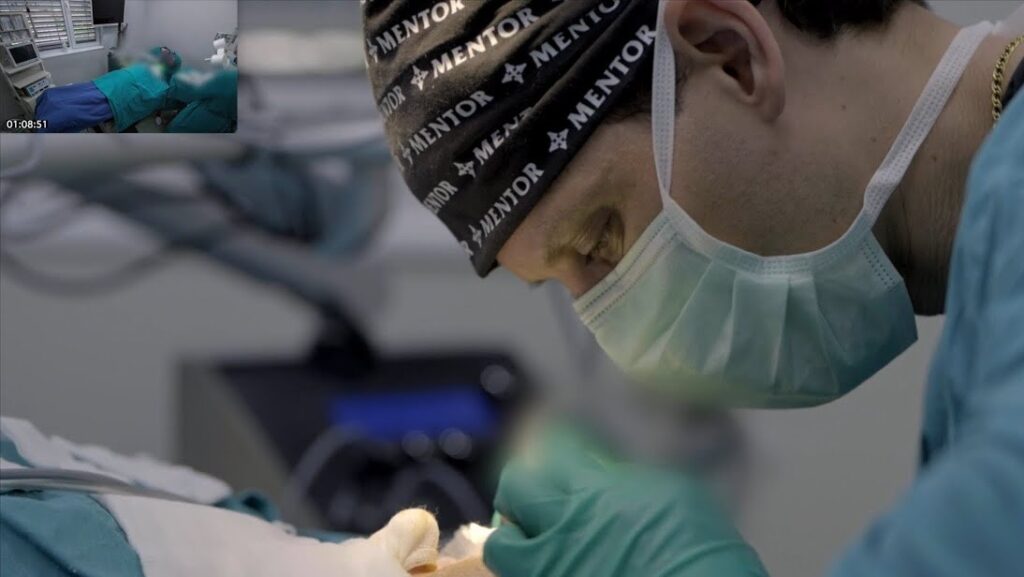
Comparison of AVA vs Traditional FUE
1. Harvesting Method
Traditional FUE:
-
Surgeon scores the graft with a manual or motorized punch.
-
Surgeon removes the graft with forceps.
-
Risk of twisting or compressing the graft.
-
Punch size: 0.7 to 1.0 mm (and occasionally smaller).
AVA FUE: -
Motorized punch scores the graft.
-
Vacuum lifts the graft out.
-
Minimally manipulated with forceps.
-
Punch size: 0.5 to 0.8 mm.
Benefits to the Patient
✔️ Less traumatic
✔️ Quicker harvest
✔️ More consistent grafts
✔️ Smaller dot scar
✔️ Potential for higher survival rates if performed properly
2. Managing the Donor Area
One of the largest differences and possibly controversy is the percentage of donor area that is harvested.
Traditional FUE:
-
Harvests approximately 25-40% of the donor area.
-
Conserves the donor area for long-term hair growth.
-
Appropriate for patients that may need further procedures.
AVA FUE (in the hands of an elite surgeon): -
Harvests 50-60% of the donor area.
-
May allow patients to achieve complete restoration in a single mega session.
-
Only possible to perform safely in the hands of elite surgeons with carefully selected patients.
This is the main reason some patients with severe hair loss prefer AVA: AVA provides the opportunity for large sessions that produce full coverage.
However, the risk of over-extraction is real for inexperienced clinics.
3. Graft Survival & Quality
One of the potential theoretical advantages of AVA is reduced time outside the body, since extraction is faster. Faster extraction = less dehydrated = better survival.
Traditional FUE can also provide great survival rates, but the extraction process is generally longer and involves more manual handling.
There are currently no scientific studies that confirm AVA is superior. Many of the claims are based on:
-
surgical observations
-
patient outcomes
-
anecdotal evidence
-
expert opinion
Therefore, the surgeon’s experience is the determining factor not the vacuum device.
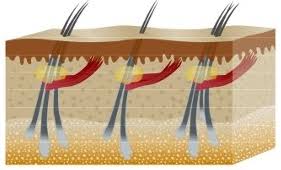
Is AVA Better Than FUE? An Objective, Honest Evaluation
Where AVA Excels
-
Best for mega-sessions
-
Superb for advanced Norwood cases
-
Smaller punches = fewer visible scars
-
Faster extraction = potentially healthier grafts
-
Less damage during extraction
-
More organized grafts
Where Traditional FUE Continues To Be Superb
-
More tactile control for the surgeon
-
Conservative donor preservation strategy
-
Lower risk of long-term thinning
-
Better suited for multi-stage restoration plans
-
Wider acceptance and support by decades of research and data
Important to realize that AVA is not inherently better than FUE. Rather, AVA is a specialized version of FUE and is ideal in the hands of an elite surgeon.
Why Most World Class Surgeons Continue to Use Traditional FUE
Regardless of the hype surrounding AVA, the majority of the world’s elite surgeons, including Dr. Konior, Dr. Bisanga, Dr. Feriduni, Dr. Erdogan, Dr. Hasson, Dr. Wong, and Dr. Lorenzo continue to use either manual or motorized FUE.
Reasons for their continued preference include:
-
more precise angle control
-
greater tactile feedback
-
lower risk of suction-related tissue stripping
-
longer term stable donor management
-
perception that grafts with a bit of perifollicular tissue survive better
-
over-harvesting concerns with rapid extraction methods
This illustrates that FUE continues to be the gold standard for hair transplantation and AVA is an advanced FUE alternative, not a substitute.
As always, the best technique is the one the right surgeon performs the best.
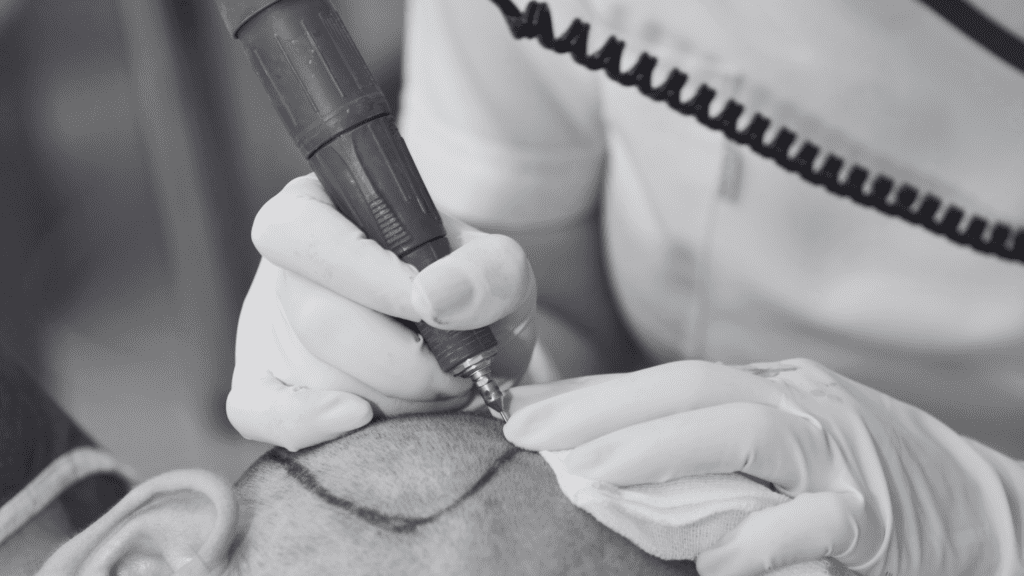
Conclusion
The AVA FUE technique is an innovative version of FUE extraction that utilizes a vacuum-assisted extraction system to remove grafts more gently and quickly. AVA is not a substitute for FUE, but an advanced tool that allows elite surgeons to conduct extremely large and densely transplanted sessions with very minimal scarring.
AVA can produce exceptional results, particularly when performed by elite surgeons like Dr. Zarev, but it is not inherently superior to traditional FUE. The success of the procedure is dependent on the surgeon’s experience, planning and technique.